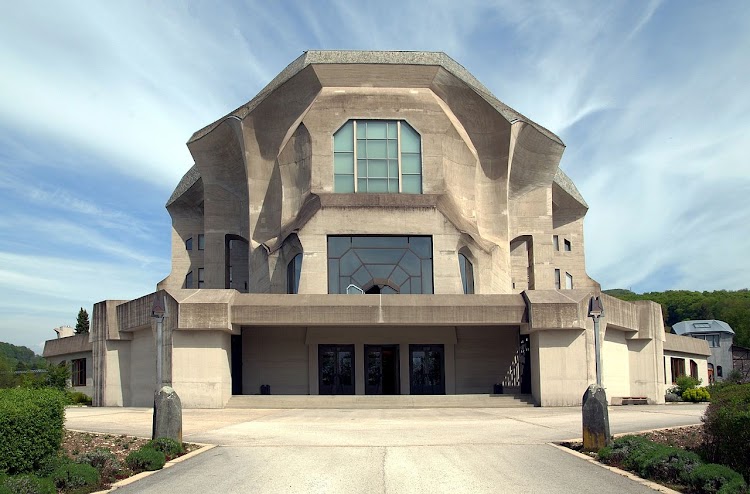
On “What Every Parent Should Know About Steiner Schools”
Last night I went to Andy Lewis’s talk on “What Every Parent Should Know About Steiner Schools”. I’d blogged my current thoughts about Steiner education the day before, just out […]
Developments in educational thinking and the education system…
Last night I went to Andy Lewis’s talk on “What Every Parent Should Know About Steiner Schools”. I’d blogged my current thoughts about Steiner education the day before, just out […]
I’m looking forward to attending Andy Lewis’ talk “What Every Parent Needs to Know About Steiner Schools” tomorrow night, even though I’m not a parent and I think I probably […]
I was lucky enough to get to hear Stephen Fry speak at one of our graduation ceremonies in the summer. It was a great speech, strong on kindness, lawnmowers and […]
If we get iTunesU at work there will be many discussions about whether to have a closed and/or open site. It would be great if the site had a pleasant, […]
As part of one of my courses I will be assessed on a personal journal. “I recommend you set up a blog” said the lecturer “for your reflections (and rants)”. […]
When I did my first degree, a few of my lecturers pushed their own textbooks; it makes sense, no doubt, since it would be a work whose authority (one hopes) […]
Hull council, now under the control of the Lib Dems, have announced they will resume charging for the healthy school meals that were introduced as free in a pilot under […]
5 days ago the Universities and Colleges Union was formed, from the Association of University Teachers and the National Association of Teachers in Further and Higher Education. Today they ended […]
…With New ‘Intelligent Falling’ Theory. Read more at The Onion
Tony Gardiner, writing in the Telegraph, finds students of mathematicians lacking when called on to combine standard techniques. Apparent improvements in exam results are deceptive…
The first state funded report on Steiner education was published today. Written by UWE‘s Philip Woods it encourages the sharing of ideas between Steiner schools and mainstream education. Steiner schools […]
Maths is (still…) in crisis, according to a new report by Tony Gardiner of Birmingham University who calls for a national debate on how to rescue it. Meanwhile the Hefce […]